
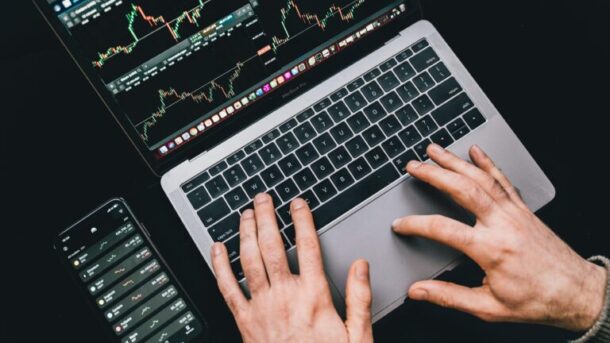
In rapidly changing markets, traders who are keen to be ahead of the pack are turning to automated alert systems to react fast to the price changes. TradingView charts are adaptable in configuring these alerts, enabling users to observe a particular price, technical indicators or any other unusual conditions without having to remain in front of the screen. The traders may receive an email, SMS or in-app notification by setting a moving average crossover or a break-up of a critical support level. This will assist traders take appropriate measures at the right time because opportunities and potential threats are realized as soon as possible.
Giving an alert begins with the procedure of selecting the preferred chart and deciding what condition the chart should be triggered. A user must then choose parameters by clicking on the price level, the trendline or indicator option and then add an alert option. There is also a need to adjust the alert frequency as traders may want to get the alert in the form of a one time alert that is frequently repeated or an alert that is only received when a certain market condition is reached. This will provide the trader with flexibility to tailor the notifications according to their trading culture and the risk attitude, and there will be less chances of missing valuable market trends.
Visual chart analysis is usually used together with alerts to improve decision-making by traders. Alerts can be set to notify a user whenever the price of any market comes close to some important support and resistance level by simply labelling these levels directly on the TradingView charts. This combination of graphics and automatic alerts assists in keeping a disciplined strategy, where whichever trades are being entered or exited based on the previously set plans. The capability to unite technical analysis and real-time alerts decreases emotional decision-making and encourages steady strategy implementation.
The strategy testing and refinement can also be aided by automated alerts. Traders can set hypothetical conditions to view the frequency at which a particular price level is hit or an indicator is hit. This is done to analyse the performance of the trading strategies, and to make the necessary parameter changes before investing real capital. Traders understand the market patterns better through past alert behavior, and are able to maximize the points of entry and exit.
Personalized alerts do not necessarily have to be price alerts; they can also be a more complicated set of indicators. As an illustration, a trader could place an alert when the RSI moves above 70 when the price is falling below a major trend line. Such multi-condition alerts allow a more advanced strategy to be used that gives signals that are tuned to particular trading strategies. Combination of indicators in alerts will enable traders to concentrate on only high probability situations enhancing a better result in risk management.
TradingView charts provide real-time notification in several devices, which traders can receive even when they are not at the main workstation. Market monitoring is constant with mobile alerts, desktop notifications, and email messages, and it is possible to react to emerging trends in time. With this form of connectivity, any critical developments would never be missed and this is especially helpful in fluctuating markets.
The routine use of automated alerts instills efficiency and discipline in trading. Using programmed alerts, traders are able to stay focused on analysis of strategies instead of paying regular attention to market activity. Visual charting, accuracy in configuring alerts and the ability to flexibly deliver data enables traders to act systematically on an opportunity in the market and to manage risk. These interwoven automation and analysis, over time, brings about informed and confident trading decisions.